What happens when the tenant leaves? Stress-testing a data center financing.

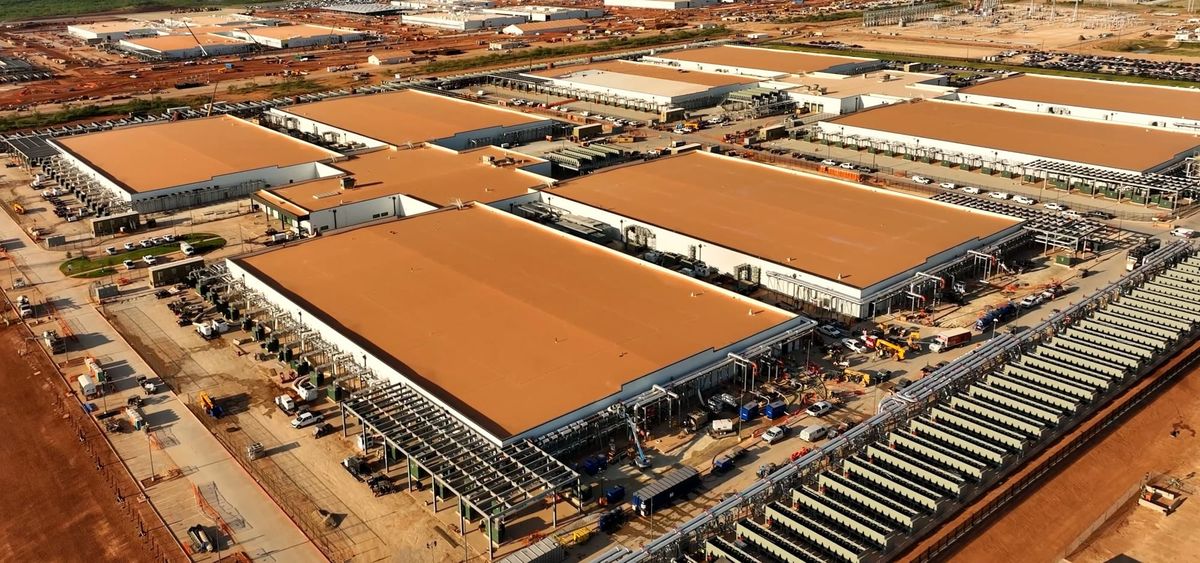
A note before we start: the numbers below are illustrative. They extend the SPV from Issue 03 and are built to show how a stress test works, not to describe a real company's financials. The point is learning which levers matter.
In Issue 01, the claim was that AI data centers are financed against a hyperscaler's lease, not the building. Issue 03 showed what that looks like on a balance sheet. Now the uncomfortable follow-up: what if the lease stops being a reliable promise?
That is the question every lender, rating agency and structurer is paid to answer. Here is how they answer it.
The setup
Same SPV as Issue 03, with two extra assumptions needed to run the numbers: roughly $80M of annual contracted income (net operating income, NOI) and roughly $48.5M of annual debt service. That gives the 1.65x DSCR from before.
| Illustrative Data Center SPV LLC | |
|---|---|
| Facility (at cost) | $900M |
| Senior secured notes | $425M |
| Mezzanine debt | $70M |
| Total debt | $495M |
| Debt service reserve | $40M (about 10 months of debt service) |
| Annual NOI | $80M |
| Annual debt service | $48.5M |
| DSCR / LTV | 1.65x / 55% |
For the covenants, assume a common pattern: cash gets trapped (no distributions to equity) if DSCR falls below 1.35x, and it is an event of default below 1.10x.
How the professionals stress it
Rating agencies don't just ask "will the tenant pay?" KBRA's data center ABS methodology, for example, layers several stresses: multiple rounds of tenant default, a lag while the owner finds a replacement, a revenue haircut on the replacement tenant, periodic rent haircuts even without a default, and a stressed exit cap rate to value the property at the end. Higher target ratings get harsher versions of each. S&P has run similar exercises, treating an AA-rated tenant as if it were rated A and adding extra vacancy after year ten, and reported that the ratings on the deals it tested held up.
Strip that down and you get four levers worth modeling yourself: how long the space sits empty, what rent the next tenant pays, whether the current tenant renews at a lower rent, and what the building is worth when everything is over.
Three scenarios
| Scenario | NOI | DSCR | LTV | What happens |
|---|---|---|---|---|
| Base case | $80M | 1.65x | 55% | Business as usual |
| A. Rent reset: tenant renews at 20% lower rent | $64M | 1.32x | 69% | Cash trap triggers. No default. Equity stops getting paid, lenders are fine |
| B. Tenant leaves; 12 months empty; re-let at 75% of prior rent | $0, then $60M | 0.00x, then 1.24x | 73% | Reserve covers about 10 of 12 months; sponsor cures roughly $8.5M. Cash is trapped after re-letting |
| C. Tenant leaves; 24 months empty; re-let at 60% of prior rent | $0, then $48M | 0.00x, then 0.99x | 92% | Reserve runs out around month 10; roughly $57M shortfall; default. Mezzanine is first lender to feel it |
LTV assumes facility value moves in line with income. All three scenarios ignore re-leasing costs, tenant improvements, and the operating costs an owner carries while a building is empty, so reality would look worse, not better.
The pattern matters more than any single number. A rent cut (A) hurts equity but barely touches lenders. A tenant departure (B) is survivable if the reserve is sized well and the vacancy is short. It's the combination of a long vacancy and a deep rent discount (C) that breaks the structure. How long the space sits empty drives the outcome more than whether the tenant leaves at all.
Who gets hurt first
The capital stack from Issue 03 is really a loss waterfall. In this example, the facility's value would have to fall about 45% before total debt exceeds it, and about 53% before the senior notes lose a dollar. Equity absorbs losses first, then the mezzanine, and only then the senior lenders. That ordering is the whole point of tranching, and it is why the same asset can hold investment-grade senior paper and equity-like mezzanine at once.
Why this is harder than it looks
When an office building loses its anchor tenant, the owner calls a broker. A data center is a different animal: the power connection, cooling and layout may be built around one tenant's specifications. In a KBRA roundtable, a data center was described as "a power contract with a building attached," which is a good way to think about what a replacement tenant is actually buying.
The harder problem is evidence. KBRA's own analysts have pointed out that there is limited data on hyperscale lease renewals and no workout history showing what lenders actually recover when one of these goes wrong. The stress assumptions above are informed judgment, not observed history.
The market is starting to ask the same questions
Recent reporting suggests investors are asking harder questions. In August, IFR reported that Meta's follow-up to its landmark Louisiana financing, a joint venture with BlackRock, drew lukewarm demand, and that data-center-lease liabilities at hyperscalers have grown nearly three times as large as their outstanding debt, according to Moody's data. In early October, Bloomberg Law reported a selloff in data center debt on the secondary market, with credit default swaps on hyperscaler debt near their widest levels of the year.
None of that is a default. It is a repricing. But it is exactly what you would expect if lenders began putting a little more weight on the scenarios in the table above.
Three questions to ask of any data center deal
How many months of debt service does the reserve cover? Our example holds about 10. If the likely vacancy is longer than the reserve, the sponsor's wallet becomes part of the credit.
How far is today's rent from market rent? A lease signed at a premium to market carries a hidden rent-reset risk at renewal. A lease signed at market carries less.
How many turns of DSCR sit between base case and the covenant? Ours has 0.30x of cushion before cash gets trapped. A thin cushion means small shocks start redirecting cash early.
The tenant leaving is rarely the event that breaks a deal. The event that breaks a deal is a long vacancy meeting a thin reserve.
Next issue: how a hyperscaler keeps a data center off its own balance sheet, and what the Meta joint-venture structure means for who actually holds this risk.