Who really holds the risk? Inside Meta’s off-balance-sheet data center deals


Issue 04 stress-tested a data center SPV: what happens if the tenant leaves and the building sits empty. That exercise assumed the tenant and the owner are two separate parties.
In some of the biggest AI data center financings, they are not. The tenant also owns 20% of the building, runs its construction, and guarantees what it is worth. This issue looks at how that works, and why it matters for anyone deciding who is actually on the hook.
The anatomy of Hyperion
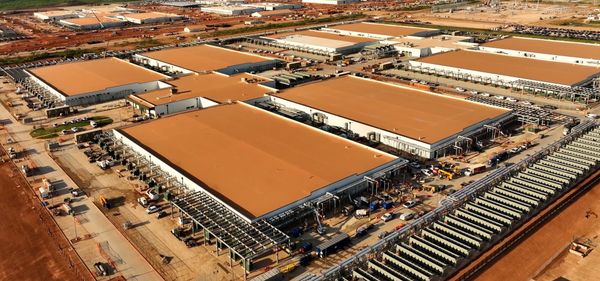
In October 2025, Meta announced a joint venture with funds managed by Blue Owl to develop its Hyperion campus in Louisiana. The public facts:
| Hyperion (Meta / Blue Owl) | |
|---|---|
| Ownership | Blue Owl funds 80%, Meta 20% |
| Total development cost | About $27bn |
| Debt | Roughly $27bn Rule 144A project bond issued through Beignet Investor (per IFR) |
| Meta's lease | Operating lease; initial term of four years, with extension options |
| Residual value guarantee | Meta guarantees campus value for the first 16 years of operations; capped cash payment if a lease isn't renewed or is terminated |
| Meta's other roles | Construction management and property management |
| Rating | A+ from S&P, one notch below Meta's own AA- (per IFR) |
Read those rows as a lender would. The sponsor that is rated AA- pays the rent, builds the campus, manages it, and promises to make up the value if it walks away. Blue Owl owns most of the equity. The bonds are rated off Meta.
Three levers that keep it off the balance sheet
Meta's position is that the structure meets the accounting rules. The rules, in plain terms:
1. Who controls the entity. Under US GAAP's variable interest entity test, the party that is the "primary beneficiary" has to consolidate the vehicle. Meta's view is that Blue Owl, with 80% of the equity and the formal governance, holds that role, so Meta does not consolidate the JV or Beignet.
2. How long the lease is on paper. Meta's lease is an operating lease with a four-year initial term. Under lease accounting, a renewal has to be "reasonably certain" before it counts toward the lease term. Meta's position is that renewal isn't, so the lease stays an operating lease and the commitment stays largely off its balance sheet.
3. How much of the value Meta has promised. Lessees also test whether lease payments plus guaranteed residual value add up to "substantially all" of the asset's fair value. Meta's position is that four years of rent plus the guarantee falls short.
None of this is improper on its face. These are judgment calls inside accounting rules, and S&P has said full consolidation would not change Meta's AA- rating. But critics, including IFR's own analysis of the deal, argue that substance and form diverge: a four-year lease that the tenant has every economic reason to extend, backed by a 16-year value guarantee, behaves like long-term financing.
Who holds the risk, nominally versus economically
| Risk | Nominal holder | Where it actually sits |
|---|---|---|
| Construction | JV owners | Meta, which manages construction |
| Rent over the life of the asset | Blue Owl-owned JV (as landlord) | Meta, as tenant |
| Value of the building if Meta leaves | JV equity | Meta, via the residual value guarantee (capped) |
| Bond repayment | Beignet Investor | Largely Meta's credit, per the rating approach |
| First-loss equity | Blue Owl funds | Blue Owl, behind the bonds |
Compare this with Issue 04. In our illustrative SPV, the worst scenario was a long vacancy meeting a thin reserve, and the reserve was the answer. In Hyperion, the answer to that scenario is Meta's guarantee. That is tenant-credit substitution at its logical end: the tenant's credit is no longer just the source of rent, it is also the backstop for the collateral.
Two details deserve attention. First, the guarantee is capped, and the cap is not disclosed in the public announcement. How the cap compares with the debt it is meant to protect is the question that decides how much of this is truly Meta risk. IFR's analysis describes the guarantee as sized to repay the bonds; Meta's own release only says "capped," so treat the sizing as a reported claim, not a confirmed one.
Second, the reported debt service coverage ratio is thin. IFR cites S&P at 1.12x once the campus operates. Using the rule of thumb from Issue 03, anything under 1.2x is tight, and our illustrative SPV in Issue 04 had a default trigger at 1.10x. A 1.12x deal still gets an A+ because lenders are leaning on Meta's credit, not on a cash flow cushion. That is the whole structure in one number.
The template is being copied
In July 2026, BlackRock launched a $12.3bn bond for a Meta campus in El Paso, Texas, expected to provide up to 1 gigawatt of capacity. The vehicle, Sopaipilla Investor, issues notes due in 2048. BlackRock's Global Infrastructure Management and HPS units hold 80% of the project and Meta holds 20%, the same split as Hyperion, with BlackRock standing in for Blue Owl. Initial price talk was about 2.875 percentage points over Treasuries. IFR called it almost a carbon copy of the October deal, and reported that demand was lukewarm.
That last point is the interesting one. The first deal was priced as a novelty. The second was priced as a repeat, and investors were noticeably more selective about the same risk.
The scale of what is not on the balance sheet
Moody's has estimated that the five largest hyperscalers (Amazon, Microsoft, Google, Meta and Oracle) have nearly $1 trillion of future lease commitments. About $662bn of that is not on their balance sheets, because accounting rules allow leases that are signed but not yet started to be left out. That amount exceeds the five companies' current total debt, and equals 113% of their latest adjusted debt. In plain numbers: for a company with $100bn of adjusted debt, that would be $113bn of commitments you can't see in its reported leverage.
Moody's also notes that new leases run about four to six years to the first renewal, against 10 to 15 years historically, and that renewal and backstop obligations are often not reported at all. Its own conclusion is that no one can pin down the true size. It did not announce any rating action in that report.
Four questions for any deal like this
Who is the primary beneficiary, and how thin is the equity? An 80% equity owner that bears the economics of a guaranteed asset is behaving differently from a normal investor.
How long is the lease that can't be cancelled, compared with the debt? Four years of firm rent against bonds that run into the 2040s means the structure rests on renewals.
What does the residual guarantee cover, and is it capped? The cap, not the headline, tells you how much credit is real.
Is the rating off the sponsor or the vehicle? A rating that tracks the tenant tells you who the bondholders are really lending to.
My view, and you should weigh it as a view: for a lender, the accounting label matters less than where the cash comes from, and in these deals the cash comes from Meta. For an equity investor in the JV, the question is different, and much less settled.
Next issue: when the collateral is a chip. How GPU-backed loans work, and what happens to the loan when the collateral loses value in five years rather than fifty.